Thursday, July 21, 2011

Communities for Change

Compiled by: Yankho Konyani
Written by: Sara Thompson

ADRA Malawi has seen some incredible changes due to the implementation of the Communications for Social Change Program (CFSC), and the community-based groups that have followed. The CFSC Program aims to help communities come together for a common goal, to assess the needs of that community, and to engage with the right sources in order to see their goals become realised. This program has helped to empower community members to become a force for change in their own local areas.

Some community-based groups have raised the area of HIV/AIDS as an issue of concern. In some areas, activities have changed from discussions to formal advocacy activities, and many of these activities have fuelled a desire for action. At the Kochilira site, a tremendous change in the area of HIV/AIDS has been brought about through the CFSC training. ADRA Community Development Facilitators helped facilitate the establishment of the Kochilira Network (KONET+) support group for those living with HIV/AIDS, to discuss common issues. The issue addressed was the incomplete implementation of Antiretroviral Treatments (ART) in all health facilities in Mchnji was a key advocacy issue discussed by this community group. During one of the community dialogue sessions, those living with HIV/AIDS brought up the poor accessibility to Antiretroviral drugs (ARV) because of the long distances these patients have to walk for access on a monthly basis to Mchinji District Hospital and Kapiri Rural Hospital. However, there are other rural hospitals in their area which would be far more accessible, if ARV could be obtained there.

The community group first approached stakeholders about the issue of making ARV accessible. When this had no effect, a petition was signed by the group village head, the traditional authority, and all those on Antiretroviral Treatments, in order to raise awareness of the problem and to urge leaders to action. It was submitted to the district communities, who influenced the District Health Office (DHO) to act on the issue, and strive to make ARV more accessible to those living in rural communities.

With an Antiretroviral unit established in September 2010 at Kochilira Rural Hospital in Mchinji District, the fight for treatment has finally been won. Communities who have previously been disadvantaged in the area of ART now have more accessible treatment options available to them, thanks to the effort made by the Kochilira community. This change was made possible due to ADRA’s CFSC program, which enabled those involved to confront the issues tactfully and persistently. As a result, those affected by HIV/AIDS in this area now have access to treatment, and those involved in the campaign have been empowered to stand up for the certain issues in their area, and for the change they wish to see.

Wednesday, July 13, 2011

Nutrition brings in the money

Story by: Mercy Chakoma
Food Security & Nutrition Officer, TL Project


Employment is becoming scarcer in Malawi. Many people are trying their best to utilize the resources available to them, such as small home garden crops, to help generate income for their households. When soya bean seeds were distributed in Tsogolo Labwino Project impact areas, the beneficiaries were happy to access free seed but worried about its limited popularity. Even though they were told that they would receive trainings in how to grow and produce various products they could not believe that soya could so useful in improving their livelihoods.

When the nutrition trainings began not many people participated, choosing to instead continue with their daily household chores. This was discouraging. However, since then people have started to realize the benefits of using different crops and learning different recipes. Tadala Juma is one of those people receiving great benefits from soya beans.

Tadala was struggling to help her husband provide for their family. She therefore, decided to utilize two recipes that she learnt from the nutrition trainings: soya milk and soya coffee. Acting swiftly, she started making soya milk which was selling at 50 kwacha, half the price of cow’s milk. She also sold the coffee at the same price. Tadala marketed and sold her soya milk to tea room owners who also increased their profit base. After one month of producing these products, she raised 48, 000 kwacha.

Tadala then bought a piece of land at 15,000 kwacha and used the remaining money to buy basic needs for her baby and to pay school fees for her son who is in form 1.

Tadala is very thankful to ADRA through Tsogolo Labwino project and said, “the good future (which is what Tsogolo Labwino means) would be realized long after the project but I am already enjoying the good future whilst the project is still operating.”

Through her obvious success Tadala was elected by her community to be a community facilitator for nutrition. Through her new role she is able to encouraging her fellow women to use soya and to make and sell various products. Her influence and success is helping other women provide for their families and to improve their livelihoods.

The success of this project can be seen through the sharing and implementation of knowledge, knowledge that is providing people with income to improve their livelihoods.

A simple soya bean can make a big difference.

Friday, July 1, 2011

Money can grow...

By Chikondi Madikiza-Madumuse – Communications and Advocacy Officer

The introduction of Village Savings and Loans (VS&L) looks to be a strategy that would enable Malawians especially those from the rural communities to have savings of their own and potentially to invest in small scale business or other investments ideal to them.

Last year, ADRA Malawi introduced this concept to some communities in the district of Mulanje. Mulanje is an area adorned with coffee and tea plantations and crowned by Mulanje Mountain and the Sapitwa peak. Yet, despite its beauty Mulanje is also densely populated; leaving a lot of people with only small pieces of land, while its adornments, the tea and coffee estates and land and wildlife conservation areas occupy most of the arable land.

Since Malawi’s main income generator is agriculture, the small pieces of land have made it difficult to make ends meet for the communities. At the end of the day they find that they do not have enough income to save after selling their produce. With the money they earn they cannot open a bank account; they resort to keeping the money at home and as problems arise the money is used before they can invest it.

But this is slowly changing. VS&L has brought in a different dimension in the attitude of villagers towards money; they realize they can save and make investments with the little that they have. All they need is a group, a cash box with three locks and keys and agreement within their group on the minimum cost of a share.

One group that was formed last year with ADRA Malawi’s efforts is singing praises for VS&L and more groups are emerging. The outcomes are overwhelming.

Secretary for the Sitigonja (literally meaning we won’t give up)VS & L group in Group Village Headman Manyumba, Stella Banda, says she had never received or owned Mk 6, 000 as her own before, but VS&L has allowed her to see and have that much money. The group comprising of 25 women saved their money for 9 months, at the end of these nine months, the members invested up to Mk 103, 360.

Ms. Banda says, “It was unbelievable; the first person – one with more shares- received Mk 10, 000. I received Mk 5, 800 and I was able to pay school fees for my three children two are in form two and one is in form four. One of our friends managed to renovate her kiosk with this money. We are happy that ADRA brought this idea. As I am speaking people are forming their own groups there are over ten groups in this area. Thanks to the training we received from ADRA Malawi we are also able to help other groups organize themselves to begin VS&L."

ADRA’s technical Officer on Food Security and Livelihood Mrs. Elsie Mwimba, says the response from communities has been overwhelming. “More groups were formed, more than we had planned and could physically handle, so instead of stopping these new groups we encouraged the groups that we had trained to share their knowledge with the self organized groups for VS&L," she said.

Apart from Mulanje, ADRA has also introduced this concept in Neno District and intends to do the same in other target areas like Lilongwe, Machinga and Mzuzu.

The popularity of these groups because of the contribution VS&L makes to improved livelihoods has resulted in groups spreading beyond ADRA’s target areas.

Behind the Scenes of Water for All

written by Krystle Praestiin

Monday afternoon we arrived at our first borehole site drilled by ADRA Malawi. I had developed a basic plan for what shots I wanted to collect but I knew that plans on paper aren't always easily achieved in real life. So even though I was excited about this opportunity to film a very pertinent issue affecting many lives in Malawi, I was not sure what we would find. I was worried that we wouldn't meet any women drawing water, especially because at this particular village people were expecting us to arrive on Tuesday.

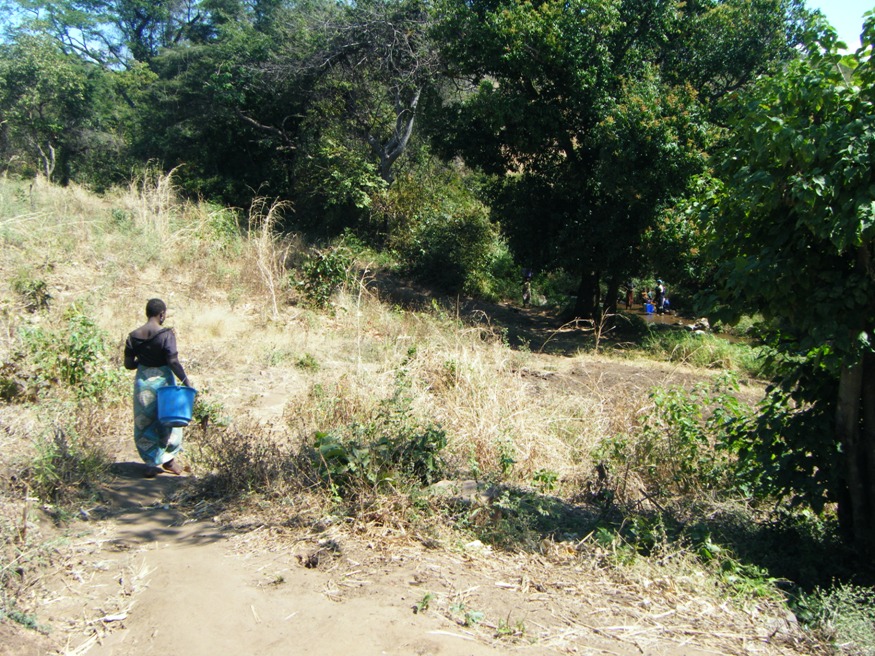
However, what struck me throughout the whole filming trip was that at every part of the day you could always find women and children using water for various purposes, such as washing clothes and drawing water for drinking, cooking or cleaning. It sure made our filming easier and reminded me of the integral role water plays in all our lives. I was also able to see that it was much easier for women with a borehole to collect water, particularly if one was near their homes, compared to the women who had to walk several meters/kilometres for water from a river, shallow well or stream.

After filming the borehole and its users, we arrived at a village where the people have been drawing water from an unprotected, shallow well. My first thoughts were - "I can't believe people actually drink this water." Some unprotected shallow wells are able to at least provide clear looking water, but this shallow well provided the community of 100 households with muddy soup. Filtering the water requires boiling, cooling, and then pouring the water through a towel into a clay pot. Unfortunately, this process isn't enough to prevent them from contracting water borne diseases like cholera and diahorrea. No one should have to drink that water. And just to top it off, upon further inspection we discovered that on one side of the well was a colony of frogs.

The best part of seeing this shallow well was knowing that in a few weeks time, this community would be receiving a borehole from ADRA Australia and the funds donated by individuals and organisations in Australia from REGEN, COMOS, Avondale College Church and Sanitarium.

Before we left - in true African style - the women and children danced and sang a song of thanks to ADRA for a future without the need of drawing water from the shallow well. It was a wonderful experience, knowing that a big difference would be made in their lives from the soon coming borehole.

Tuesday saw us walking three kilometres away from a borehole to a village where, due to such a distance from the borehole, the community is forced to collect water from a river. Before we left for our walk I drank water from my water bottle, quickly deciding that I would not take it on my journey. I think that decision came from guilt for having such easy access to clean water. It was hot, and the distance seemed to run further away from us the more we walked.

We arrived at the village, where we walked a bit further to reach the river, the main water source for this village. The bank leading down to the river was steep and slippery - to think that women do this in the rain with heavy buckets on their heads! I could barely do it in the dry with just a pen and a folder to carry. As we filmed, I learned from our guide that during the rainy season the river becomes "fierce", rising in volume and speed. At times people from the village have found human bones and clothes washed down from villages further up stream. Not many of us can say we find such things in our drinking water or experience life or death when getting a drink.

When filming was completed for that day, we faced the long walk back to the car and clean water. Water was much needed, as our long journey back saw us all getting very thirsty. I tried not to talk often in an attempt to maintain moisture inside my body. The whole party was very parched by the time we arrived back at the car where my large water bottle of iced water welcomed us all. I cannot imagine having to walk to a river in the hot sun to collect water, and then wait for it to boil and cool before I could drink it. Yet this journey of my own helped me to experience the reality of many communities in Malawi.

On Wednesday we filmed our main actress. We had hoped to film her during the very early morning just as the sun was rising. To do this we got up at 3 am and began our journey to the village, although as it turned out, even as the sun was rising there was not enough light to get a good picture on camera. Sadly our commitment did not show on the water documentary, but despite the lack of footage, it was a good chance to see the village coming alive- from the burst of flames at various households, to the women, bucket in hand, walking in the early morning grey to collect their first bucket of water. At the river we also saw many of the activities that get preformed besides collecting water, such as washing clothes, cleaning food, washing hair and (much to one ladies enthusiasm for being on camera) other body parts (note: this was not actually filmed, and her privacy was somewhat maintained), all of this just within the same area that women were collecting drinking water.

To get somewhat clean water, women will dig out small holes in the river, creating a kind of well, however as we learned from many people that we interviewed the only way to combat water borne diseases is through a borehole which provides protected and clean water.

Our last day of filming was to collect any shots we had missed. Overall, the filming trip was a big learning experience, and it was amazing to see the difference that a borehole can make. Whenever we interviewed people with a borehole, at the end they would always request a borehole for neighbouring communities who did not have access to one. They saw the difference a borehole made and wanted others to share in it.

Currently, ADRA Malawi is drilling six boreholes, three of which were made possible through the support and donations of the individuals/groups and organisations within Australia. Tsogolo Labwino’s Project Manager Francis Zande says, "we are considered to be heroes by these communities. Instead of the planned three we are now drilling six. This is a great thing!"

To watch the water documentary video go to: http://www.youtube.com/watch?v=q71j6YUlMLM and see what a big difference you are making and can continue to make to people in need of clean water.

If you are interested in donating go to:
http://www.adra.org.au/support/donate.htm and donate to Krystle Clear Waters Project (Malawi).

Tuesday, June 28, 2011

Bicycle Ambulance to the Rescue

Shadreck Bandawo, Institutional Strength Coordinator, Tsogolo Labwino Project

It was a very hot, sunny midday when I passed a man in his early 70s lying on a roughly made pole stretcher, cushioned only by a thin line of grass. He was being carried to the health center, nearly 30 kilometers away, over the heads of four men who looked tired and hungry.

Patrick Zakaria was the name of the man being carried to the health center. When he fell sick with asthma his community came together and made the stretcher hoping that he would be able to make the long distance in time.

To their great fortune, along the way they passed through one of ADRA Malawi’s impact areas, Namgogoda Kumanga Umodzi (KU) under Group Village Headman Chaseta. When members of the KU saw this group of people struggling with the stretcher they quickly informed their KU leaders of the need. Immediately the Bicycle Ambulance was brought to the group and Mr. Zakaria was transferred from the stretcher to the Bicycle Ambulance.

A sense of relief developed on the faces of the stretcher carriers, the wife of the old man and the other companions. The rest of the journey was a lot easier and quicker and Mr. Zakaria made it to the health care center in good time. To symbolize the end of troubles and as per custom the stretcher was dismantled and broken into pieces.

Early this year the Kumanga Umodzi (KU) group wrote a proposal to ADRA Malawi addressing issues that affected their community, especially sudden sicknesses and long distances to Health Clinics. In their proposal they asked for a Bicycle Ambulance to ease their mode of transport to the nearest health centre situated 15 kilometres away from their village. Thanks to the funding received from ADRA Australia, ADRA Malawi was able to provide this community and 18 other communities with a much needed Bicycle Ambulance.

Patrick Zakaria, from a neighbouring village would not have received the help he required without the support of ADRA Australia and ADRA Malawi. Bicycle Ambulances are a vital form of transport that saves lives.

Friday, June 24, 2011

MACDONALD has a garden

Story by: Mercy Chakoma, Food Security & Nutrition Officer


Elephants are animals that make most people appreciate nature. However, for Macdonald Nyamayasauka who lives in Mkwatire village, Salima, elephants are what destroyed his crops.

In search of food elephants often wonder into people’s fields, especially during the times when food is scarce in the bush. Unfortunately, some people have even lost their lives to elephants during these “food raids”. It is hard to stop a hungry elephant and this is how Macdonald lost half of his maize crop last season. What he was left with was not enough to feed his wife and three children.

However, all was not lost for Macdonald when he found himself among several beneficiaries receiving cassava cuttings and trainings in improved farming from the Tsogolo Labwino project, funded by AusAid through ADRA Australia.

Macdonald received 2 bundles of cassava that eventually multiplied to 1 acre. To avoid elephant attacks on his field he planted his crops closer to his home in a homestead garden. Later he also received 2 bundles of sweet potato vines of which he planted in the homestead garden as well. After applying all his acquired knowledge and skills, the success of his homestead garden has relieved him from fears that he would not be able to feed his family.

These crops have not only provided food but have also provided him with income. With this extra money he can now buy basic needs such as soap, milling and salt. It was easy to see the joy this has brought him.

In the future Macdonald hopes to expand his garden even at the cost of coming across elephants. He is encouraging his fellow farmers not to give up but to keep trying other means of protecting their fields like making noise and lighting fires to scare the elephants. He also thanks ADRA for their help and wishes the same to extend to other needy people in different areas.

Monday, April 4, 2011

Commemorating World Meteorological day


Written by: Chikondi Madikiza-Madumuse

The sun was brilliantly bright, pupils in green and white uniforms, women in light blue chitenjes, and more than half of the audience in white T-shirts, each displaying the message, ‘Climate for you ’.

This was the outlook in Mulanje District, Chisitu, where the Department of Meteorology services were being held in celebration of World Meteorological Day which falls on March 23.

This was a day of sensitizing, educating, entertaining and informing the communities in Mulanje about Climate Change. Traditional dances, poetry recitals, songs, drama and speeches depicted the importance of good environmental management and generated enthusiastic support and smiles on the faces of those watching and listening.

Pupils in primary school right up to the District Commissioner, all spoke of the impact of climate change which is currently being felt throughout the country, particularly in Mulanje where recent floods have resulted in the loss of lives and property as well as injury to several people.
In his remarks during the celebrations, the District Commissioner for Malanje, Kris Ngulube said Mulanje is one of the districts that has been heavily affected by climate change resulting in weather pattern changes and floods.

“Deforestation in this area has lead to floods. The mountain is bare, the lower grounds are bare, and there is no way water can infiltrate into the soil”, he said.

Deforestation in Mulanje is fuelled by land challenges, most land is being used for tea and coffee estates, this leaves the community with small pieces of land, and for some the only choice they have is to cut down trees near or on the sidelines of Mt. Mulanje to secure land. As a result of this, the bare land permits fast flowing water to gush from Mt. Mulanje and rivers which surge into floods.

However, the deforestation in Mulanje doesn’t just affect Mulanje. In his remarks Deputy Director for Meteorological Services in Malawi, Mr. Munthali said, “Malawians need to understand that actions in Mulanje not only affect this area but other areas as well.

For instance, if Mulanje does not have vegetation cover, the waters from Mulanje Rivers feed into the Shire river, later the Shire river overflows and you find that people from the Lower Shire are affected by floods every year”.

Youth taking lead action

Another memorable part of the commemoration was the participation of the, youth from Chisitu Primary schools.

Mr Munthali, expressed the importance of their involvement, he said, “If we invest information in the youth today, it will help us mitigate the impact of climate change tomorrow. That is why today we have involved them. As they grow they will grow with knowledge that our own actions can negatively affect climate and this can be catastrophic.

Most of these young people have seen the effects of climate change. Their homes have been carried away and some do not manage to get to school because bridges have been carried away, so it is very real for them.”

One of the youth who was involved in the activities, said young people should start realizing the importance of planting trees.

“If one cuts down one tree, ten trees should be planted to replace that one,” said Chipiliro Longwe.

During the day young people prepared songs, dances, drama, placards and poems to sensitize the communities on the impact of climate change with the aim of inciting community involvement in environmental management.

ADRA Malawi applauded for its efforts in fighting climate change:

ADRA Malawi’s presence at the ceremony through its Project Women Empowerment was greatly appreciated and their efforts in environmental management have helped to further the fight against climate change.

Some of the activities include planting more than 25,000 trees in the Kumponda Village and encouraging communities to use energy saving stoves. These stoves reduce deforestation by only using half the amount of firewood compared to normal firewood stoves. 400 community members have been trained through the ADRA Malawi project, on how to construct and use the stoves.

Furthermore, ADRA Malawi through its Program Action For Social Change (ASC) involved the Meteorological Department in its media program to inform the nation about climate change, its effects and the way forward.